
We’re tearing each other apart.
We’re tearing ourselves apart.
I feel on guard and carry a torn heart almost all the time. Not to the point that I can’t get on with my days, that there’s too much worry or sorrow to take action, or that I can’t find joy here and there. I can do all of that and I’m very grateful for it.
But there is a humming in the background, like the kitchen fan you forgot to turn off when you sit down to have dinner. A creeping presence, constantly there. The brain learns to ignore what remains constant, so you need to pay attention consciously to notice it. Except on the days when it gets louder, when it comes to the surface by itself.
Besides the war and violence we are all witnessing in Gaza, Ukraine, Iran, Sudan, Afghanistan and the many regions impacted by extreme division and persistent crisis, we’re also seeing more struggle and rupture in the daily life of places where harmony and peace allegedly reign. Far away from the atrocities that many suffer, and yet a consistent erosion of the collective sense of unity.
From my spot living in central Europe I see:
- Political polarisation. Berlin, as both city and state, voted a few weeks ago. The far left won 25% of the votes in the capital of a country where the far right is rising everywhere.
- The housing crisis. This was the main topic in the electoral programmes for the Berlin elections. It is also what triggered the snap elections in Spain, after thousands took over the streets of Madrid demanding dignified housing, while the far right voted down the emergency decrees the government had proposed to address the crisis. And it is why my Irish partner and I can’t even fathom moving to Ireland, one of the countries suffering most from the housing crisis in Europe, with a 115% rent rise since 2010 (more than four times the EU average).
- The poor state of education. Teenagers in France are rioting and getting tear-gassed because they demand more social equality across the national education system, better buildings, more teachers, fewer students in each class and shorter school days. A child growing up in a deprived neighbourhood in France starts at a disadvantage the school system does little to undo. A 2018 estimate by the Organisation for Economic Co-operation and Development (OECD) suggested it would take around six generations for a low-income French family to reach the average income, against about four and a half across the OECD.
This is just recent news in Europe, and I notice the same thing underneath each headline: a social, political and financial gap that keeps widening across the world.
Where does it come from? One root is clearly the growing wealth gap.
“Extreme concentrations of income and wealth translate into undemocratic concentrations of power, unravelling trust in our societies and polarising our politics.”
This comes from the open letter published in September 2026 in support of the International Panel on Inequality (IPI), signed by more than 1,500 academics and economists from over 100 countries, who urge global leaders to back an initiative against extreme inequality.
Wealth, power and privilege hoarded in the hands of a few feed our polarities of opinion, while the many struggle more every day to make ends meet and to get the very basics to live with dignity.
The extractivists and the extracted
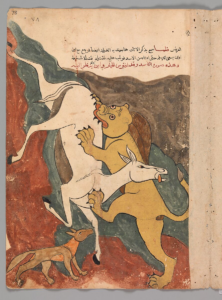
Survival mode is becoming the default mode for many.
The South of the North is already here: communities in high-income countries living with conditions usually associated with poorer regions. In India and Brazil, slums sit next to fancy airports and favelas just above wealthy neighbourhoods, extreme realities of inequality. I’m bracing myself for more of it in the Global North, as we continue to witness little change in the Global South. And many political parties use that struggle to light the fire of xenophobia, nationalism and individualism, adding more and more division in these times of rupture.
Division and inequality are also built into our tools and institutions: digital algorithms that keep you blind to alternative views and realities, foreign policies that harden visa processes (unless you have the money to jump through the hoops), and credit scores that remind you where your place is and what your lifestyle should be.
As the gap widens, we are losing diversity.
The middle thins out and people drift towards one extreme or the other. The “other” moves further away from the “I”, and we each end up in our own monoculture of lifestyle and opinion. Polarities drifting apart remove friction (the magic space where we evolve), as the edges of B don’t touch the edges of A anymore. We stay in our lifestyles and worldviews as best we can, and slowly lose curiosity or access to those on the other side of the spectrum. I’m not talking about the lives of other people in countries far away, but those right next to us. What looks miles away from us often turns out to be our neighbour.
The issue is that when others become so foreign, we can easily dehumanise them. And along the way, we can lose our own humanity. We may even invent myths about them, because building a bridge to meet them directly feels too costly and risky. Comfort is a precious thing in societies marked by struggle and inequality, and it is fiercely protected by all.
I work in the field of wellbeing, mental health and relationality, so I’m constantly wondering: how is all this affecting our being?
How are we holding up psychologically and emotionally?
I was born in the 80s in Southern Europe, so I’m part of the millennials who graduated from university and entered the job market right when the wave of the 2008 recession was hitting. We were told we could have it all if we put our minds to it and worked hard for what we wanted. But they forgot to tell us that “all” has limitations in our societies, and that willpower alone won’t get us around our skin colour, our economic capacity or our birthplace.
I got over the disillusionment a long time ago, but as those limitations get narrower and more suffocating, living inside them gets harder. I see more precarious work, more vulnerable living and more mental health issues as separation and rupture increase.
- 40% of employees experience a lot of stress, above pre-pandemic levels (Gallup's State of the Global Workplace, 2026).
- More than 1 in 3 people worldwide report a lot of worry, stress or physical pain on any given day, higher numbers than a decade ago (Gallup’s State of the World’s Emotional Health 2026).
- 1 in 7 people live with a mental disorder, with anxiety and depression the most common (WHO, September 2025).
We don’t need to be pushed to the extremes of poor mental health to still experience rupture and struggle: we experience inner division when we can’t align values with action. We often respond to what’s happening around us with dissonance because we’re obliged to compromise all the time. Our actions tend to reflect the “less bad” choice we can make, because there’s no room for more aligned, whole options. And so the erosion continues.
I feel many are walking around with broken hearts, souls, minds and bodies.
And if these words feel too dark, that’s what we’re dealing with.
Pathways forward (and inwards)
As harsh as this is, I think we need to hold the pain that division, inequality and extraction are causing. Not to become martyrs, but to observe reality as it is. Ignoring or bypassing what is truly going on is just another way of rejecting wholeness, of tearing us apart further.
I believe a practice of awareness and intentional observation is where we can take a first step, adding tons of compassion towards ourselves and each other as we navigate the current state of the world.
That practice starts with slowing down enough to look for the roots of what we see and experience. And as we slow down, the pause and the pondering begin to calm our nervous system, we see with more clarity, and maybe the action we take next won’t deepen inner or outer division.
This won’t fix the inequality and the widening gaps in our societies, but at least it can help us take better care of ourselves and feel more unity within.
Inner work by itself won’t change our systems, but I doubt we can change them at all without it.
Image: "The Monkey Tells the Story of the Fox Luring the Ass to its Death by the Lion", Folio from a Kalila wa Dimna. Second quarter 16th century
(source: MET Museum)